
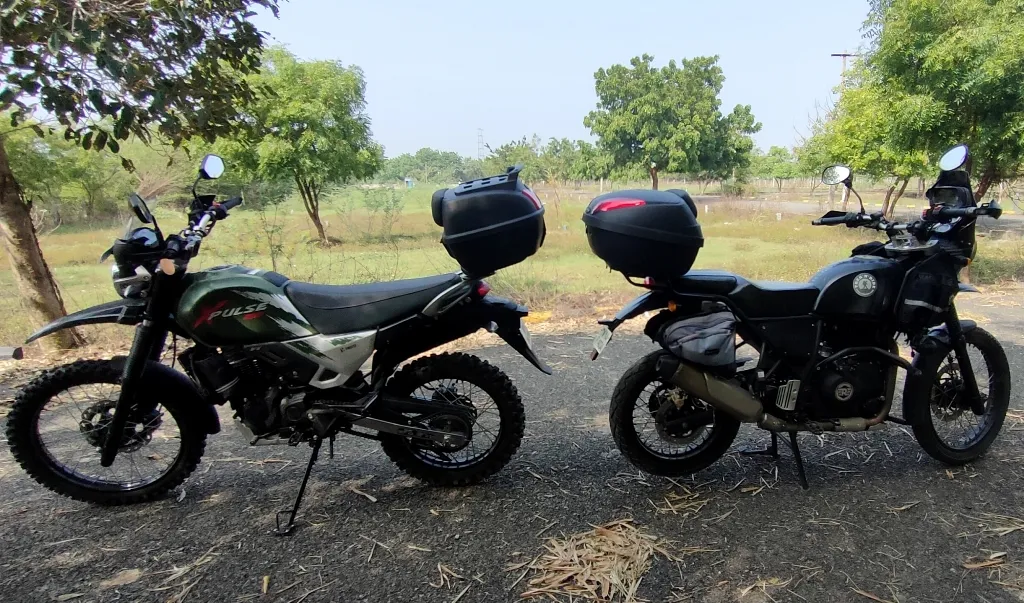
The wrong material choice on a motorcycle top case order is invisible on day one and expensive by month six. Plastic shells crack, aluminium shells dent, and the box that survived your container crossing can still fail the first curb strike in São Paulo. The aluminum vs plastic top case decision is not about which material is “better” — it is about which failure mode your customer can live with, and at what landed cost.
This comparison is built from our own production runs and purchase orders, brand-published load ratings, and 2025–2026 market data — not brochure claims. You get the material science, the payload math, the street-price evidence, and the stocking mix we recommend for Latin American importers.
The material science in one table
Retailer comparisons say “aluminium is stronger” and stop there. The actual numbers matter when a distributor argues with a customer over warranty claims, so here they are:
| Property | Aluminium alloy | ABS plastic | Practical impact |
|---|---|---|---|
| Density | 2.7 g/cm³ | 1.04–1.07 g/cm³ | ABS is roughly 60% lighter for the same volume |
| Tensile strength | 200–500 MPa (by alloy grade) | 40–50 MPa | Aluminium is 4–10× stronger under tension |
| Service temperature | −40 °C to +150 °C | −20 °C to +80 °C | Aluminium tolerates sun-baked parking and desert freight |
| Impact behaviour | Dents, keeps structural integrity | Flexes, may crack under hard impact | Aluminium deforms; plastic fractures |
| Corrosion | Good when anodized; can oxidize | Inherently rust-proof | ABS needs no protective coating |
| Recyclability | 100% recyclable, high scrap value | Recyclable, low scrap value | Aluminium has better end-of-life value |
| Surface finish | Brushed, polished, powder-coated | Molded texture, paintable | Aluminium reads “premium” on a listing photo |
Source: compiled from industry materials data published in Alibaba.com’s B2B material comparison for motorcycle luggage (2026). Real properties vary by alloy grade and plastic formulation.
The global aluminium alloy market itself is projected to grow from USD 150.97 billion in 2025 to USD 278.72 billion by 2035 — a 6.32% CAGR driven largely by lightweighting demand — which is why alloy prices and aluminium-case retail prices stay structurally higher than plastic.
Weight and payload: the number that actually decides
Every comparison on the internet lists empty weight. Almost none connect it to the rack rating that governs whether the box is legal and safe to carry. Street-measured ranges:
| Capacity | ABS plastic (empty) | Aluminium (empty) | Typical rack rating it must fit |
|---|---|---|---|
| 30–35L | 3–5 kg | 5–6 kg | 3–5 kg (commuter scooter) |
| 40–45L | 3.5–5 kg | 5–8 kg | 4–6 kg |
| 50–65L | 4–6 kg | 7–10 kg | 6–10 kg (touring / heavy-duty racks) |
For a concrete brand reference: SHAD’s SH40 — a 40L ABS case — weighs 4.8 kg empty and carries a maximum recommended load of 4 kg. Do the subtraction and the case plus its rated cargo is nearly 9 kg, which already exceeds most scooter rack ratings. GIVI’s ALA56A Trekker Alaska, a 56L aluminium case rated to hold two modular helmets, sits at the top of the aluminium weight band.
Three rules for your PO:
- Subtract the empty box from the rack rating first. A 45L aluminium case at 6.5–8 kg on a 5 kg rack is over limit before you load a glove.
- The lowest number in the chain wins — bike manual, rack label and plate rating rarely agree. Our top box size guide works through that math capacity by capacity.
- Freight is weight, too. ABS cases cut logistics cost roughly 15–25% per unit in the B2B analysis, and a container of plastic cases lands measurably cheaper than the same volume in aluminium.
The four shells below cover the full ladder, from commuter plastic to 65L aluminium:
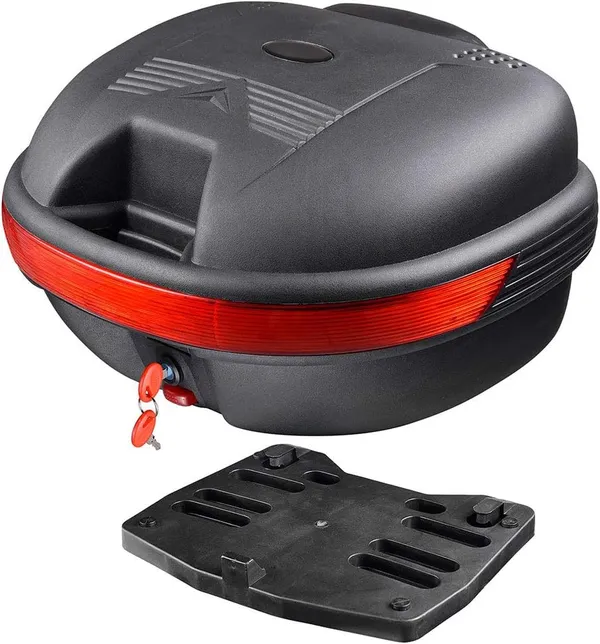
- Capacity:
- 30L
- Dimensions:
- 18" L x 15" W x 11" H
- Material:
- PP (polypropylene) – wear and impact resistant
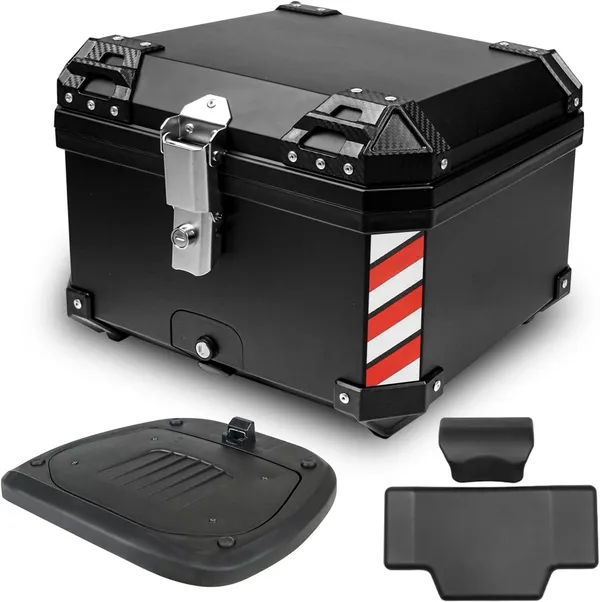
- Capacity:
- 45L
- Dimensions:
- 16.14" L x 13.18" H x 14.56" W
- Material:
- High-quality durable plastic with weatherproof coating
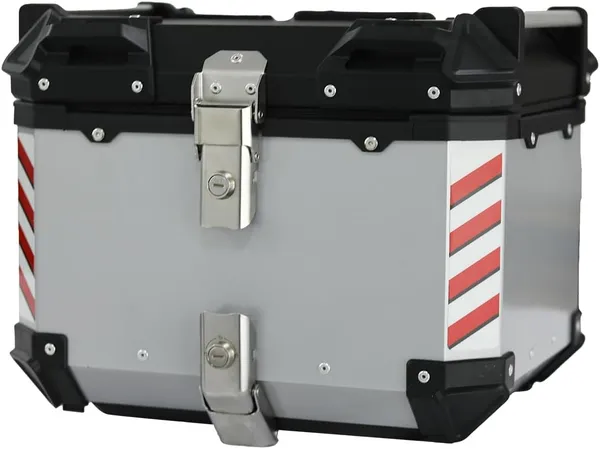
- Capacity:
- 45L
- Dimensions:
- 18.1" L x 16.5" W x 15.7" H
- Material:
- Thick magnesium-aluminum alloy + leather shock-absorbing lining
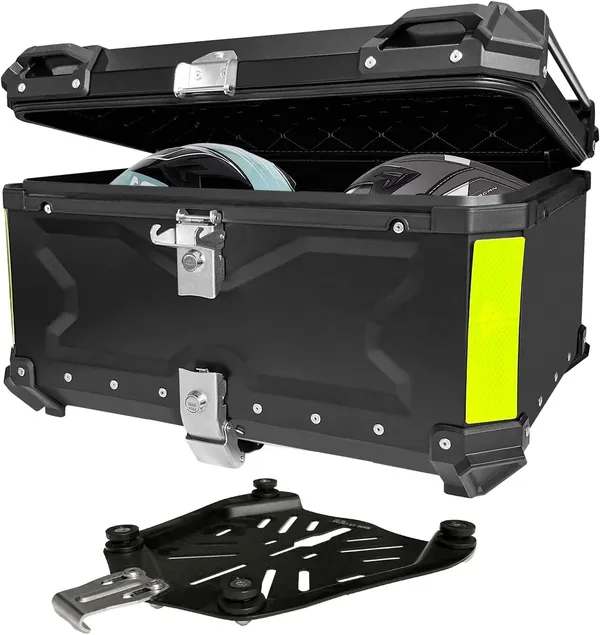
- Capacity:
- 65L
- Material:
- 2mm aluminum alloy plate + fiberglass/nylon bumper corners
- Waterproof:
- Rubber-coated sealed lid and removable PU leather liner
Impact, drops and repair economics
This is where the materials genuinely diverge.
- ABS plastic flexes on low-speed tip-overs and walks away with scuffs. Under a severe crash it cracks or shatters, and a cracked shell is a replacement, not a repair.
- Aluminium dents instead of cracking. A dented corner still seals, still locks and still carries load — riders routinely keep dented aluminium boxes for years. But sharp impacts transfer energy into the mounting plate and rack instead of absorbing it.
- Warranty claims run lower on aluminium in the B2B data — dents are cosmetic; cracks are claims. Budget 2–4 years as the minimum service life buyers expect from either material.
From our pre-shipment checks: the two failures we reject most on incoming top-case orders are plastic lids with hinge wells thinner than spec (they crack at the screw bosses within a season) and “aluminium-look” shells that are actually ABS with a foil finish — the giveaway is the lid interior, where the coating stops. We weigh random units per carton and gauge wall thickness at the lid rim, because a supplier who ships one under-spec shell per carton ships a thousand.
Weather and security
Both materials keep rain out when the gasket is properly specified — waterproofing is a baseline expectation in user reviews, not a differentiator. The published evidence:
| Test / feature | Plastic (ABS) | Aluminium |
|---|---|---|
| Rain testing | Sealed lids standard on brand cases | GIVI tests cases against simulated heavy rain at 20 l/min flow rate |
| Corrosion | Immune by nature | Needs anodizing; raw edges can oxidize |
| Lock security | Double-lock systems exist (e.g. SHAD Handle Lock locks case and release together) | Harder to pry; weaker points are the hinges and latch, not the shell |
| UV / heat aging | Can fade and embrittle in years of tropical sun | Unaffected; paint and anodizing may chalk |
On theft resistance the verdict from hands-on comparisons is consistent: no top box is truly theft-proof, but aluminium takes meaningfully more force to breach, and a thief with a pry bar gets through a plastic shell faster. For delivery fleets carrying phones, cash boxes and customer orders, that difference shows up in loss reports.
Pricing and landed cost for importers
Street and retail prices, with sources — our own catalogue is quote-based, so we do not list our prices here:
| Price point | ABS plastic | Aluminium | Source |
|---|---|---|---|
| US retail, 45L class | $93–112 | $130–200+ | Alibaba B2B analysis (Amazon-sourced) |
| Retail premium | — | ABS runs 30–40% cheaper | same |
| India street, 40–45L | ₹4,500–8,000 | ₹12,000–20,000 (45–55L) | TrekNRide market guide |
| B2B wholesale vs retail | typically 40–60% below retail | same band | Alibaba B2B analysis |
| Freight per unit | 15–25% lower logistics cost | heavier = higher freight | same |
Three importer-level conclusions:
- ABS wins the volume game. Cheaper material, faster injection-molding cycles, cheaper replacement lids — the right default for e-commerce and commuter programmes.
- Aluminium wins the margin-per-cubic-metre game in the premium and ADV segments, where buyers pay for dent-over-crack behaviour and the industrial look. It also justifies bundling with a matched rack.
- Hybrid positioning is real. The market increasingly accepts plastic bodies with aluminium base plates — the structural strength where it matters at ABS’s weight and cost.
The Latin American demand context
Material choice interacts with who is actually riding. Brazil’s IBGE counted roughly 405,000 app-platform motorcycle couriers in 2025 — up 15.4% on 2024, and almost double the 211,000 recorded in 2022 — working an average 44.9 hours a week for a net R$ 2,221 a month (PNAD Contínua, published September 2026). That fleet is the largest replacement-demand pool for top cases in the region: boxes that open fifty times a day wear latches, gaskets and hinges out fast, regardless of material.
For that buyer, weight beats prestige — a 30–45L plastic case saves payload for the actual cargo. For the trail and ADV segment, aluminium still commands the listing. And for Brazil specifically, remember the CONTRAN dimension and reflector rules covered in our size guide: an oversized aluminium case is a roadside stop, not a sale.
What to stock for Latin America
| Buyer profile | Recommended mix | Why |
|---|---|---|
| Scooter accessory distributor | 60% 30–45L plastic, 40% 45L aluminium | Commuter volume on plastic; aluminium for the upgrade buyer |
| Delivery fleet supplier | 45L plastic with reflective strips, keyed-alike locks | Replacement cycles are short; stock lids, gaskets and locks as parts |
| E-commerce seller (Mercado Libre class) | 45L universal plastic + 45L aluminium at two price points | Listing photos sell the aluminium; the plastic converts the price filter |
| Trail / ADV specialist | 45L and 65L aluminium with matched racks | Sell rack and case as a kit; dent-over-crack is the selling point |
| Honda Navi / underbone niche | 30L plastic case + Navi rack + storage box cover | Model-specific fitment beats universal plates in this segment |
Browse the full top box range in our luggage & storage category, and pair box orders with covers and rain gear for the same customers.
Frequently asked questions
Does an aluminium motorcycle top case rust?
No — aluminium does not rust like steel. It can oxidize and chalk at raw cut edges, which is why anodized or powder-coated shells are worth specifying. ABS plastic is inherently corrosion-proof but can become brittle after years of tropical UV exposure.
Which lasts longer, aluminium or plastic?
Both deliver the 2–4 years buyers expect when properly built. Aluminium usually survives crashes better — it dents where plastic cracks — while plastic survives neglect better, since it needs no coating maintenance. The hinge, latch and gasket wear out first on either material.
Is the extra cost of an aluminium top case worth it?
For adventure, trail and touring buyers, usually yes: the dent-over-crack behaviour, higher pry resistance and premium resale value support the 30–40% price gap. For pure commuter and fleet volume, plastic’s lower price and freight cost usually win.
Can I mount an aluminium case on a 150cc scooter?
Physically yes, practically often no. A 45L aluminium case weighs 5–8 kg empty against rack ratings of 3–5 kg on most commuter scooters — the same weight math our size guide details. On small scooters, a 30L plastic case is the correct product.
Are “aluminium-look” plastic boxes a problem?
They are a legitimate budget category — ABS with a metallic finish — as long as listings say so. The problem is sellers who pass them off as metal. Check the lid interior (foil coatings stop at the rim), weigh the unit, and test the shell with a magnet (aluminium is non-magnetic; neither is ABS, but steel-reinforced hinges are).
Source both materials from one factory
MaxorPro manufactures plastic and aluminium top cases, racks and mounting hardware on the same lines, with private-label branding, factory-fitted reflective strips for Brazil, and pre-shipment inspection reports on every order. See the 30L plastic, 45L universal plastic, 45L aluminium and 65L aluminium cases, the Honda Navi rack and storage box cover, or send your target mix and price points through the contact form for a mixed-container quote.